Sarah Harton
English biography

English biography
Roxane détient un DEC en interprétation danse classique au Cégep du Vieux- Montréal de concert avec l’École supérieure de ballet contemporain. Elle danse pour la compagnie de l’École, le Jeune Ballet du Québec et fait également partie de la distribution de Casse-Noisette pour les Grands Ballets canadiens de Montréal. Roxane fait ses débuts dans le milieu professionnel en s’associant à Cas Public, dirigée par Hélène Blackburn, à l’automne 2003. Depuis, elle évolue sur les scènes nationales et internationales avec Cas Public.
Elle fait partie de plusieurs productions notamment Furies/Gamma de Estelle Clareton, D’autres ailleurs de Sylvain Poirier, Loops de Ismaël Mouaraki danse urbaine, Le baiser de Johanne Madore cie Corpuscule Danse, Interdit de s’embrasser de Georges-Nicolas Tremblay et Les Steppes de Pierre Lecours. De plus, elle est de la distribution de trois courts-métrages, Sur le fil et Boite noire des productions Mass Vidéo Film ainsi que Training Session du réalisateur Christian Lalumière. Roxane se joint également au spectacle de Danse Lhasa Danse, une production de PPS Danse et de Coup de coeur francophone. Parallèlement à son métier d’interprète, elle est très engagée dans l’enseignement de la danse. Vu sa grande passion pour la musique, elle performe aussi en tant que percussionniste-danseuse. Elle co-fonde en 2011, avec les interprètes Merryn Kritzinger et Susan Paulson, Le Broke Lab, un collectif orienté vers les micro-laboratoires de recherche et création.
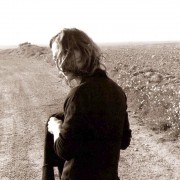
Some might have seen Lhasa’s first album, La Llorono, LLORONA as a curiosity, an exotic accident. The singer and songwriter appeared from nowhere in 1997 with an album that defied definition, capturing a Latin world of her own imagination born of an itinerant childhood spent between Mexico and the US. The music was both familiar and truly unique, a mix of ranchera music, Eastern European gypsy music, country, and popular songwriting, with intensely personal lyrics in Spanish, and a passionate vocal delivery. The album was written and produced in Montréal, and in many ways could not have been made anywhere else. These are songs inspired by a warm country but written in a cold one, with a Brontë-like romanticism, a wry and literate sense of humour, and moments of startling emotional rawness. The album made its way through Canada, France, then through half of the world, winning prizes (including a Juno and a Felix) and selling more than 700,000 copies. The Living Road, her second album, brought Lhasa to an even wider public and to greater acclaim. Her impassioned and hypnotic performances took her to hundreds of cities, from Mexico City to Istanbul. Her third album, simply titled Lhasa, feels like the work of a singer, songwriter, arranger, and producer coming into her own.
Lhasa’s songs have been used in film and television, including The Sopranos, Madonna’s documentary I Am Because We Are, the science fiction film Cold Souls, and John Sayles’ Casa de los Babys. Collaborations with other artists included work with Tindersticks, Patrick Watson, Arthur H. and many others. In 2005, the BBC’s World Music Awards names Lhasa “Best Artist of the Americas”.
Far from all the sound and fury of the modern music business, Lhasa quietly went about becoming one of the most fascinating songwriters of her generation. On January 1, 2010, Lhasa passed away in her Montreal home, succumbing to breast cancer at the young age of 37. It snowed for more than 40 hours in Montreal after her death.
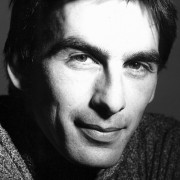
Born in Montreal, Sylvain Lafortune begins his professional career with Les Grands Ballets Canadiens (GBC) in 1979, having studied with its affiliated school. This first experience allowed him to dance classical and modern choreographies, works by Kudelka, Taylor, Limon, MacDonald and Lubovitch among many others.
In 1984, a grant from the Canada Council for the Arts and the Jacqueline Lemieux Award allowed him to study dance and theatre in Europe and in New York. Remaining in New York until 1990, he became a member of the Lar Lubovitch Dance Company as well as dancing for the Susan Marshall & Co. and in the Martha Clarke Off-Broadway production of “The Garden of Earthly Delights”.
Back in Montreal, he again joined the GBC, this time as a principal dancer, and danced a repertory that included revivals and creations from choreographers such as Joss, Tudor, Balanchine, Kudelka, Duato, Kylian and Godden. In 1995, he joined O Vertigo Danse, directed by choreographer Ginette Laurin, and, in 1998, Montréal Danse where he danced the works of Navas and De Vasconcelos.
Sylvain Lafortune also appeared in film projects such as Narcissus by director Norman McLaren, Fandango and Romeos and Juliets by Barbarra Sweete, La nuit du déluge by Bernar Hébert and Le violon magique by Raymond St-Jean.
A freelance artist since 1999, he was part of numerous independent dance projects, most notably Monsieur and S’envoler from Estelle Clareton, the Montreal Dance production of Prisme from Benoit Lachambre, and Les chaises from Pierre-Paul Savoie, an adaptation for young audience of Ionesco’s play. He shares his activities between dancing, teaching dance and working as an artistic adviser to students of the National Circus School (NCS). He created several circus shows for the NCS, notably Faërie, the school’s 2007 production at Tohu. Also in 2008, he collaborated in the creation the street performance Gramoulinophone from the French company 2 rien merci.
Parallely to his professional career, his interest for dance partnering lead him to pursue graduate studies at the Université du Québec à Montréal (UQAM). His master’s degree (La classification des portés en danse, 2003) ans his doctorate degree (L’apprentissage d’un duo chez des danseurs experts, 2010) allowed him to deepen his theoretical and practical understanding of partnering in dance. The workshops he gives, the conference he presents and the articles he publishes make him an authority on this subject.